Permanent Exhibitions

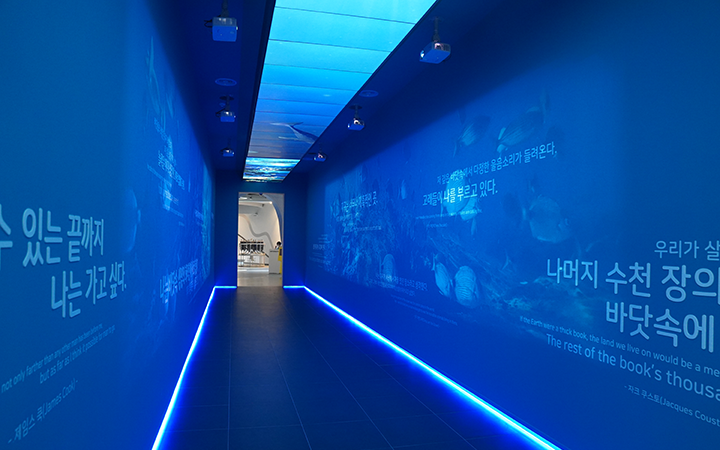
Why should we learn about the ocean?
Why do people study the ocean?
What kinds of ocean science are hidden in our daily life?
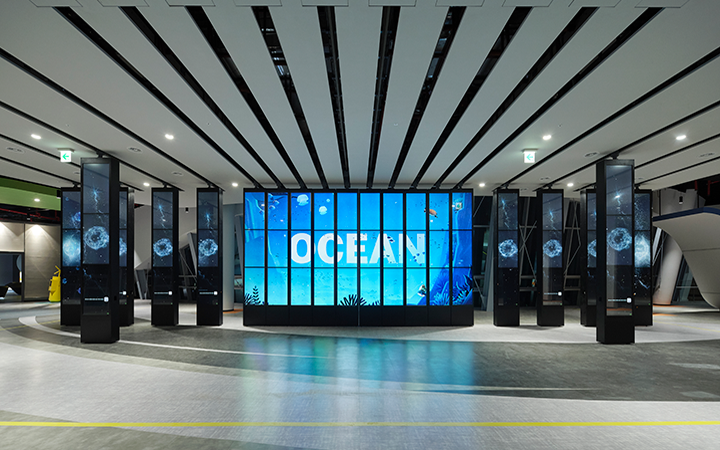
The Ocean that connects this Earth we live on. Discover the science behind it on this expedition that starts at Platform O.
Major Exhibitions

Let’s hear the stories of the countless explorers who went out to sea to solve the mysteries of the unknown that had long been a place of awe and longing for human kind.
Let’s set out for the deep ocean where a variety of marine creatures live, and learn the significance of the ocean to us.
Major Exhibitions

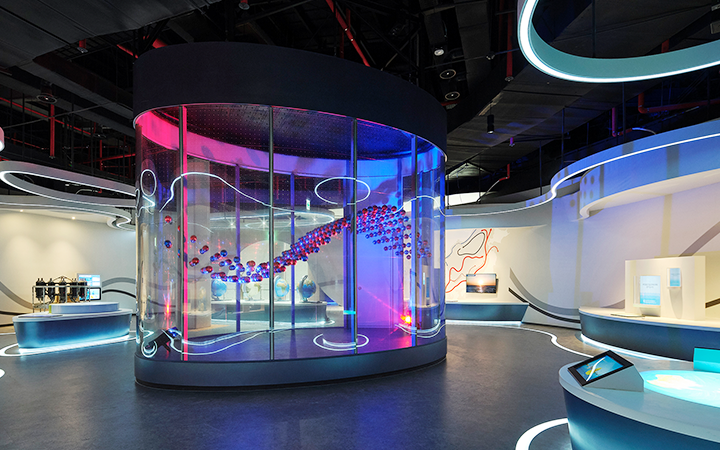
Oceans are connected to each other, forming one big mass and they circulate through ocean currents.
There are various types of ocean currents in the world. The East Sea of Korea, in particular, is a place where various currents meet and merge, creating an experimental field of ocean currents.
Let’s find out what various physical environmental causes and chemical properties of ocean water make ocean currents circulate throughout the entire planet.
Major Exhibitions
-
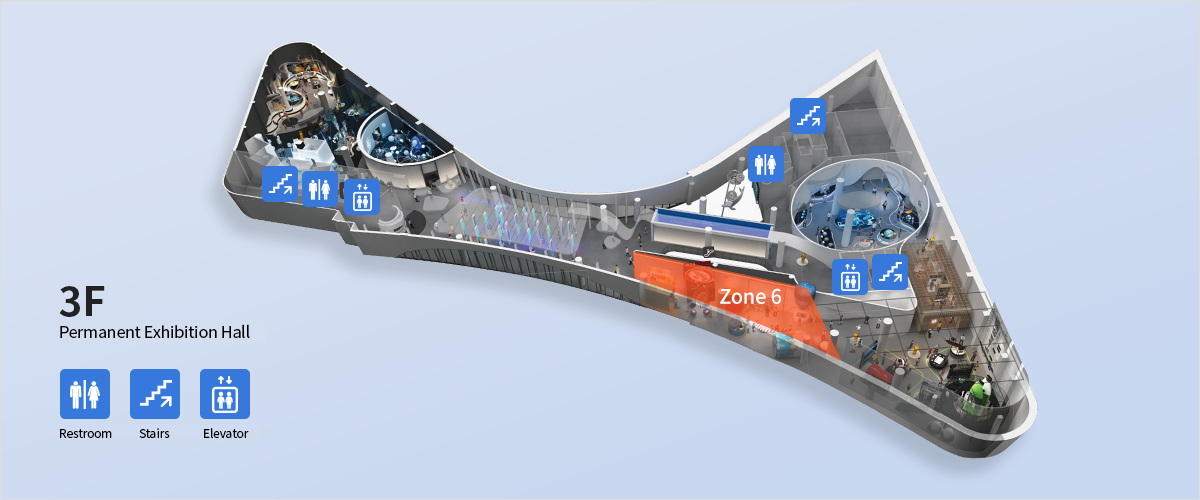
The Ocean, Large Bodies of Water Connected as OneLet’s observe the movement of currents that flow through kinetic LEDs, and find out how surface layer currents and deep sea currents connect and flow together.
-
Rubber Duck’s Journey Along the Ocean CurrentOn January 10, 1992, a cargo ship headed from China to Seattle was caught in a storm, leading to one of its containers falling into the ocean.
The bathtub toys that were in that container traveled around the world following the currents of the ocean. Let’s follow the journey of those Rubber Ducks that were found all around the world. -
Movement of Celestial Bodies and Changes in Sea LevelOcean water moves due to various causes. One of them is the perpendicular directional change of water due to the position of the solar system. In what ways does the surface of the ocean change according to the positions of the sun, earth, and moon?
-
Movement of Celestial Bodies and Changes in Sea LevelLet’s compare the salinity of the ocean water, soy sauce, rain water, and human blood through this exhibit that contains the liquids in separate containers.
Let’s find out why sea water is salty by studying salinity and the salt itself that causes salinity.
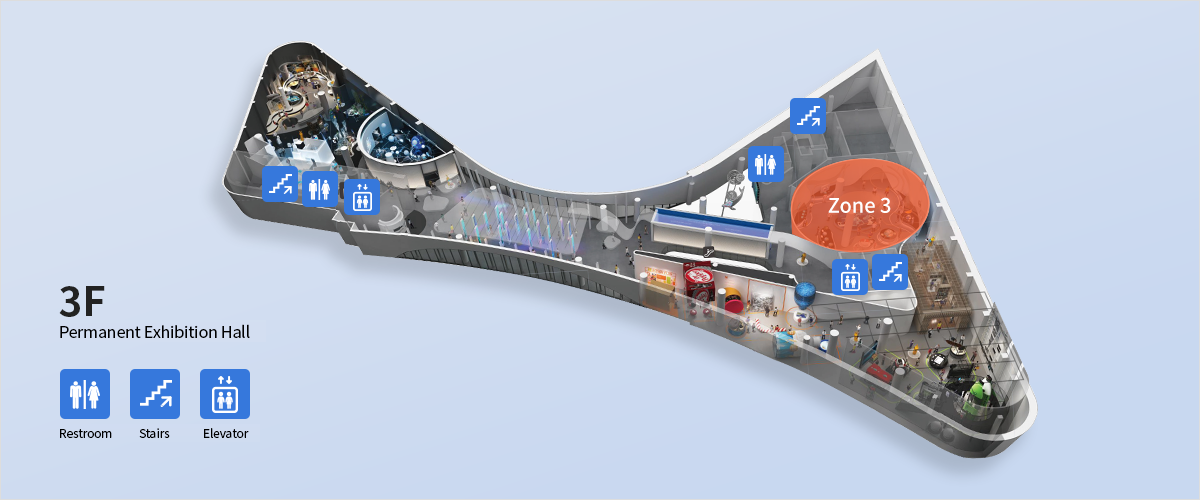
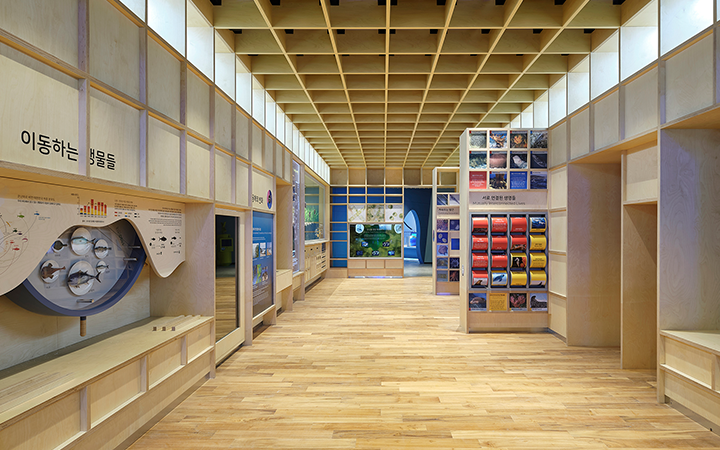
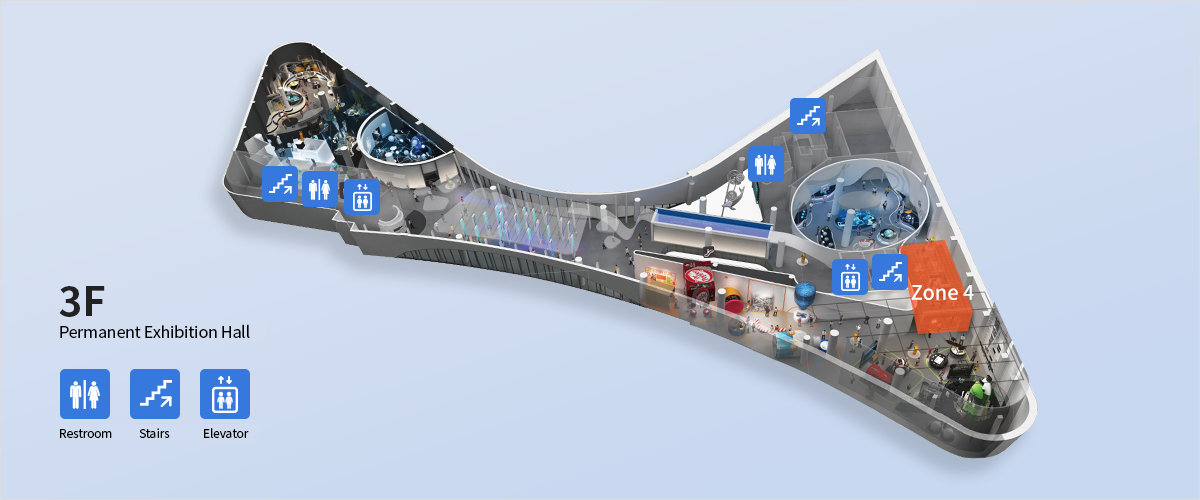
Numerous organisms, ranging from small microbes to gigantic blue whales, live in the vast ocean. The ocean is very important to us as most species found on Earth live in the ocean.
Let’s find what the organisms that adapted to various marine environments look like.
Let’s also find out the impacts that environmental changes such as climate change have on marine creatures and us.
Major Exhibitions
-
Mudflat, a Breathing CoastlineA variety of organisms live in mudflats. Mudflats in Korea maintain the greatest diversity of species in the world. Let’s find out what kind of organisms live in the mudflats of Korea.
-
Changes in the East SeaThe environment in the East Sea is changing rapidly due to changing water temperatures and other factors. Let’s find out what kinds of impact climate change, driven by global warming, causes on the marine ecosystem in the East Sea.
-
Moving OrganismsChanges in ocean water temperatures cause lots of changes in the habitats of living things. Let’s find out how these types of changes alter the types of fish in the fishing grounds of Korea and how the seafood we enjoy to consume have changed by taking a look at our dinner table.
-
Lives Connected to One AnotherA range of phenomena caused by climate change are threatening the marine ecosystem greatly. Turn the panel to learn about the endangered ocean species, and let’s find out what would happen to us if the ocean ecosystem ever becomes destroyed.


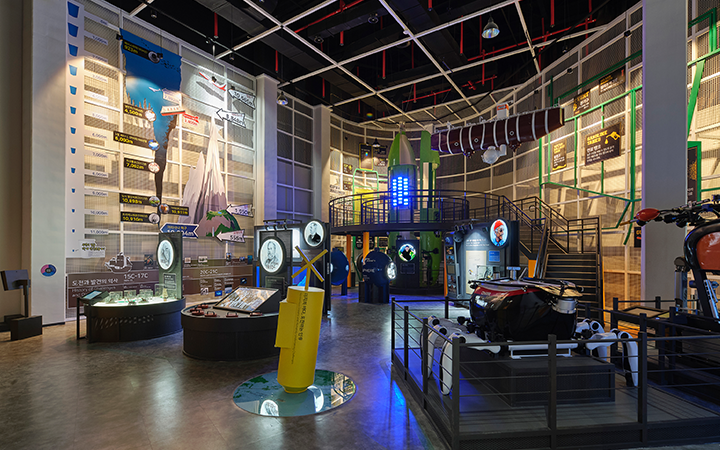
Humankind’s unwavering spirit of risks and exploration in the mysterious oceans have driven the advancement of marine science.
Let’s learn about the historic events that took place during scientific marine explorations that are continuing to this day in the modern era, and what kind of implications these events have.
Meet, in person, ‘Haemirae,’ the unmanned submarine used for Korean deep sea explorations, and ‘Crabster,’ the world’s first walking underwater inspection robot.
Major Exhibitions
-
HMS Challenger, a Comprehensive Ocean Exploration VesselHMS Challenger was the first comprehensive ocean exploration vessel to create new marine science indicators. Take a look at the exploration tools used by the HMS Challenger. Let’s find out what achievements it has made.
-
Deep Sea Challenge ProjectLet’s hear the story of James Cameron, who explored the Mariana Trench on the DEEPSEA CHALLENGER, a collection of the most advanced marine exploration technologies of the day. Let’s find out the achievements of the Deep Sea Challenge Project.
-
Crabster, a Walking RobotLet’s explore the real Crabster, the world’s first walking robot for deep ocean exploration made to endure strong tidal currents of the ocean as well as the extreme environments of the ocean floor. Let’s find out the values of the ocean that we learned through Crabster.
-
Haemirae, an Unmanned Underwater SubmarineHaemirae is a marine exploration robot that is essential for scientific underwater explorations, observation of the environment, and resource development. Let’s watch a video footage that contains how the underwater exploration was actually conducted, and find out what Haemirae looks like.


The main causes of contamination in the ocean comes from land. Various waste created on land is constantly flowing into the oceans.
How have human activities changed the oceans?
What types of efforts and activities should we do to protect the oceans?
Major Exhibitions
-
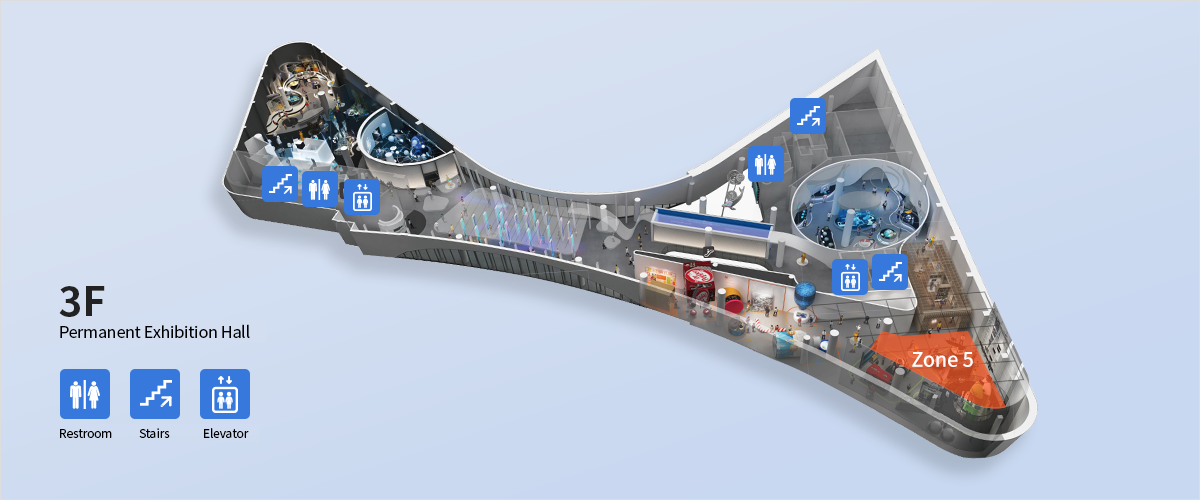
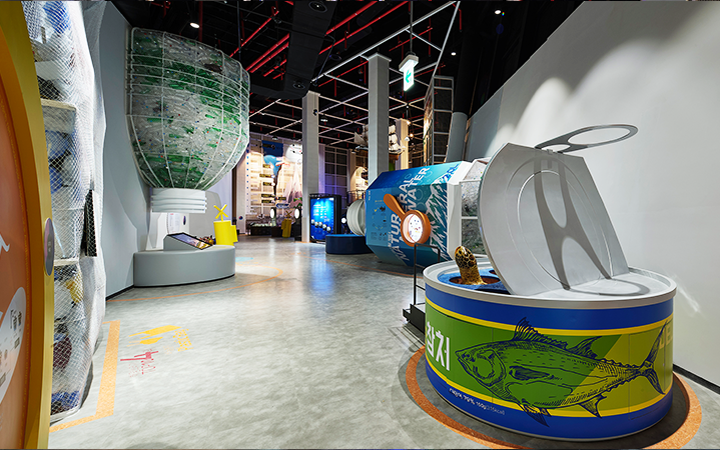
Patches of Garbage in the OceansThrough 35 years of tracing, let’s find out how these Garbage Patches were created, and then how they moved throughout the ocean. Garbage thrown away from each continent traveled along ocean currents to gather and form gigantic patches of garbage. Let’s find out how much plastic waste Korea generates.
-
Endangered OrganismsLet’s find out how many lives are sacrificed to create one food product, and discover the creatures killed collaterally. Marine creatures are facing extinction because of thoughtless overfishing done by humans.
-
Disturbed EcosystemKelp used to be found only in Asia. How did it get to the United States? The marine ecosystem is being disturbed due to foreign species that are being introduced through ballast water used to balance the weight of vessels.
-
Wrapping Paper Mistaken as FoodLet’s hear the story of a microorganism treatment method that was developed to prevent food waste that is dumped into oceans in large amounts. Let’s find out what can be achieved through these technologies, and think about what we can do to protect the oceans.


Earth’s water continuously circulates through the atmosphere, into and out of the ocean, and over and on land.
We can see the water cycle in action through weather phenomena, such as wet seasons and typhoons. Let’s take a look into the water cycle and interactions that occur in the ocean to create such weather phenomena. Currently, data is collected by observing the ocean in real-time and shared with the world. Let’s find out through what kind of systems we can observe the ocean.
Major Exhibitions
-
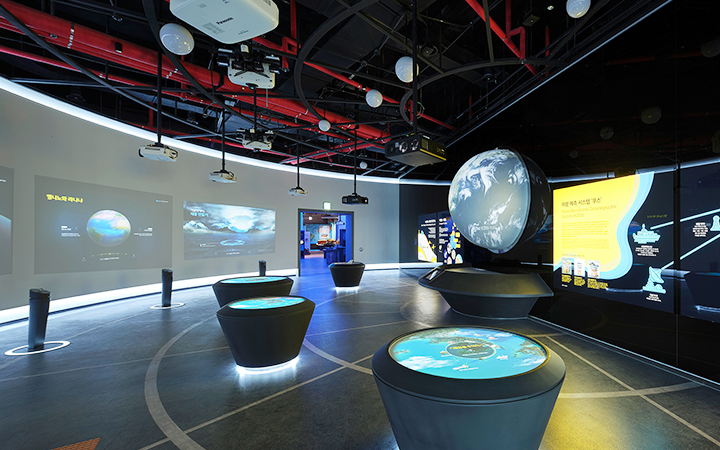
Oceans in Real TimeVarious information regarding the ocean, such as temperature and its currents, are observed through various platforms that are deep in the sea, on the surface of the sea, and in the air. Let’s take a look at the oceans that are constantly being observed.
-
El Niño and La NiñaLet’s find out how El Niño and La Niña, which have been pointed out as one of the causes of abnormal climates throughout the world, are created. Recreate El Niño and La Niña yourself by changing the strength of trade wind using the jog dial, and find out what the resulting impacts are.
-
Typhoons Created by Differences in Atmospheric PressureLet’s learn about the life cycle of storms by adjusting the atmospheric pressure using the jog dial to create or destroy a storm. Let’s find out what atmospheric pressure creates a storm.
-
Detecting Red TidesHave you ever seen different colored sea water from either a book or on the news? Red tides occur when the water color changes because of a sudden increase in phytoplankton in the ocean. Fish and shellfish are suffocated by the low oxygen concentration in the water caused by red tides. Track and resolve red tides using a sound system that detects red tides in real time.


Oxygen, which is essential for all living things on Earth, is supplied by the oceans.
Let’s explore the carbon circulation in the Earth’s ecosystem which is driven by photosynthesis of sea plants. How do you think living creatures survive in the deep sea where the sunlight cannot reach them, and the pressure is high? Let’s find out what phenomena are happening in the deep sea where the environment is stable and rarely changes unlike the surface of the sea.
Major Exhibitions
-
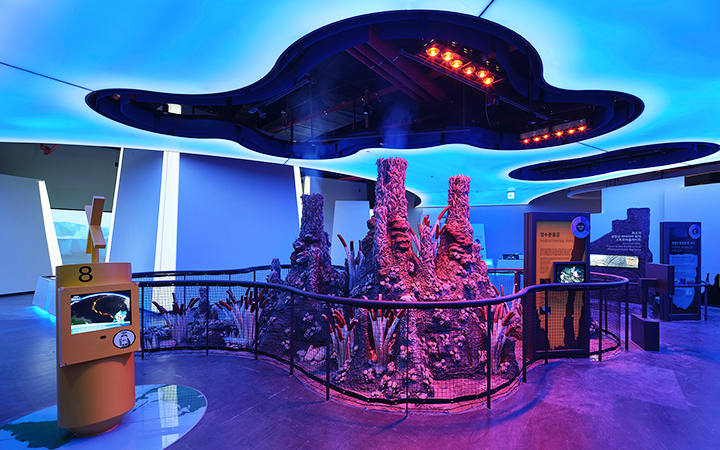
Chemosynthesis EcosystemWhat do hydrothermal vents deep within the ocean in the mid-oceanic ridges of the Atlantic Ocean look like? Let’s observe the hydrothermal vent ecosystem in deep oceans to find out what kind of organisms live in this unique environment.
-
Marine Snow in the Deep OceanHow do organisms absorb nutrients in the deep dark ocean, which accounts for over 60% of the Earth’s surface? What role does marine snow in the deep ocean play in the lives of deep ocean organisms?
-
Stable Ocean EnvironmentsThe ocean environment is known to be more stable than that of land. This is due to the characteristics of water, which makes up these oceans. What are the characteristics of water that create a desirable ecological environment?
-
Ocean, Earth’s Source of OxygenThe ocean is the Earth’s main source of oxygen. Let’s find out how the ocean creates oxygen through photosynthesis of sea plants and algae.


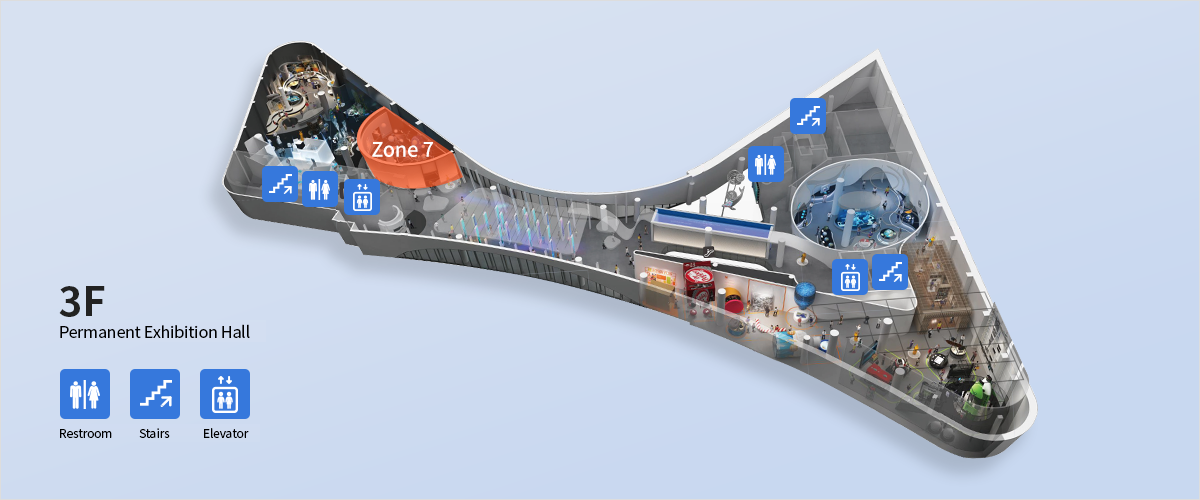
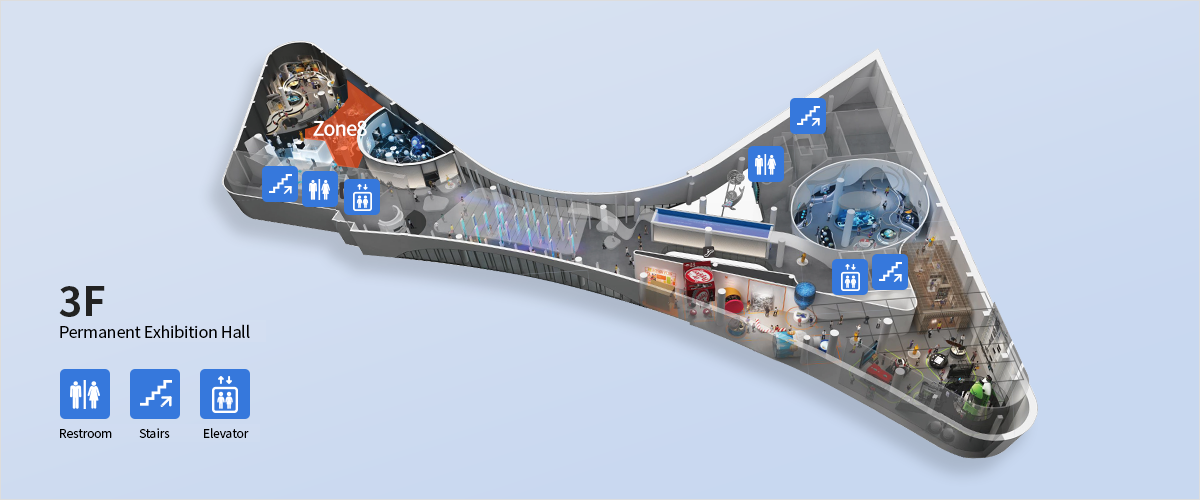
The Earth is moving and changing constantly. Let’s explore how the Earth and the oceans were created.
Let’s find out how different our Earth looked in the past compared to now, and what kind of events happened in the deepest parts of the ocean until the world came to have the current geographical features.
Major Exhibitions
-
Swaying Water, the Power of WavesWaves continuously move, carving rocks and moving sand, ultimately, changing the way the coasts look. Learn about various coastal topographies formed by the movement of waves.
-
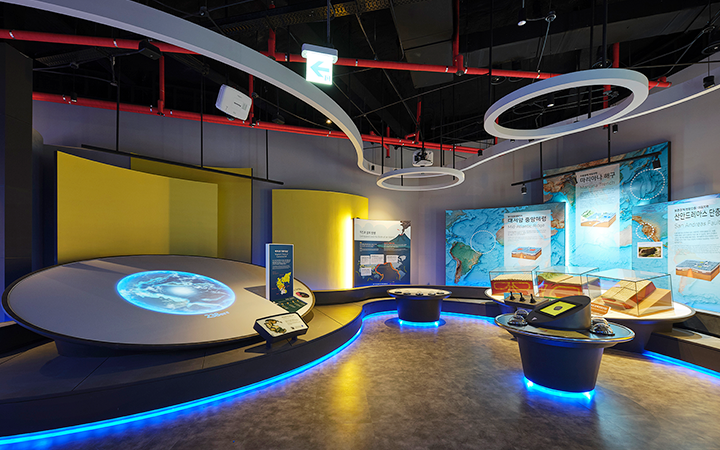
The Ever-changing Ocean CrustHow have continents on earth moved compared to the past? Check out related theories and see what is happening at the borders of plates on the deep ocean floor.
-
Earthquakes and the Birth of IslandsVarious activities that occur on the ocean floor are changing the way the Earth’s crust looks. Let’s explore various volcanic islands, and find out how they were created by underwater crustal movements.
-
Fossils, Memories of the SoilPeople developed the continental drift theory based on the fact that similar biological species are found in different continents around Earth. Find the fossils that look similar to each other throughout the different continents, and learn about the continental drift theory.


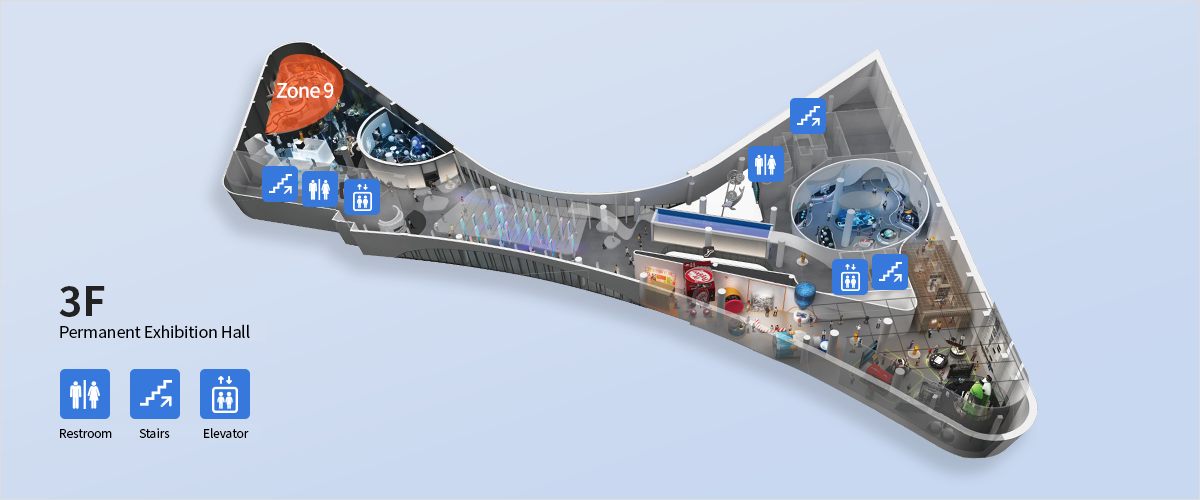
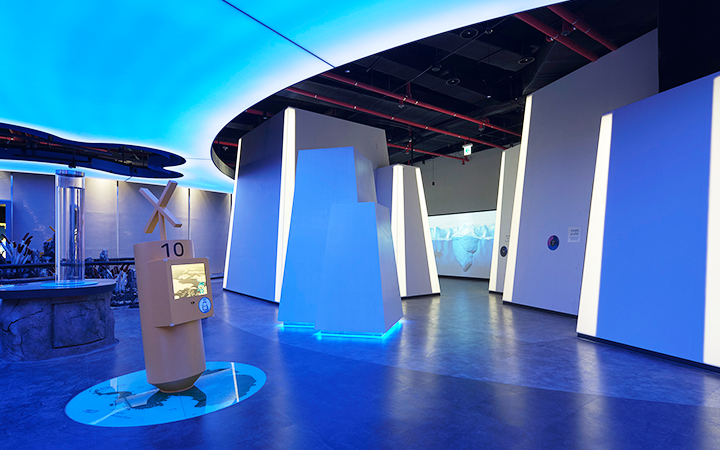
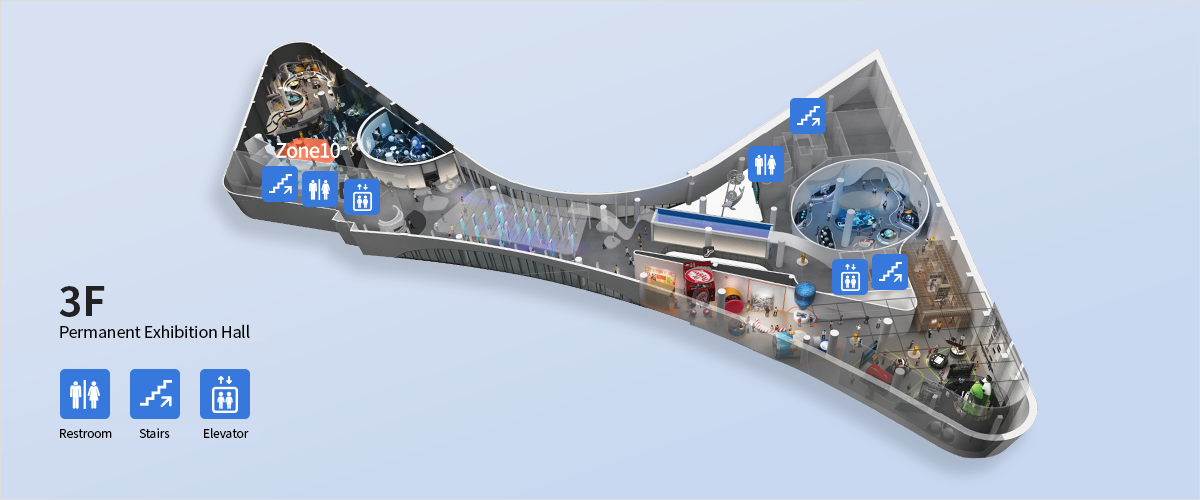
The polar regions are known to be the last remaining resource repositories, along with the deep ocean floor.
Let’s find out how climate change is impacting the environments in the polar regions. What research are we conducting in the polar regions, and their extreme environments, to predict and prepare for the future?
Major Exhibitions
-
Polar Regions, Where Deep Sea Water is MadeCold deep sea water made in the polar regions maintains the ecological environment of the polar regions. Look at the environment of the polar regions from the past through core deposits on the ocean floor. How does deep sea water from the polar regions circulate throughout the planet?
-
Difference in Density of Water and IceWhy does ice float on water? Why does water vapor float in the air? Learn about the special properties of water by studying the structural differences between water and ice.
-
Bioengineering researchWhat kind of research is taking place in Antarctica? Let’s become a researcher at the Microorganism Research Center in Antarctica, and study low-temperature biological materials and experience how biological materials are extracted.
-
Research on Future FoodLet’s explore the warehouse at the base in Antarctica, where krill is stored, and listen to the stories of people who work in the future food industries. Let’s find out why the polar regions are receiving special attention as a base for future food research.